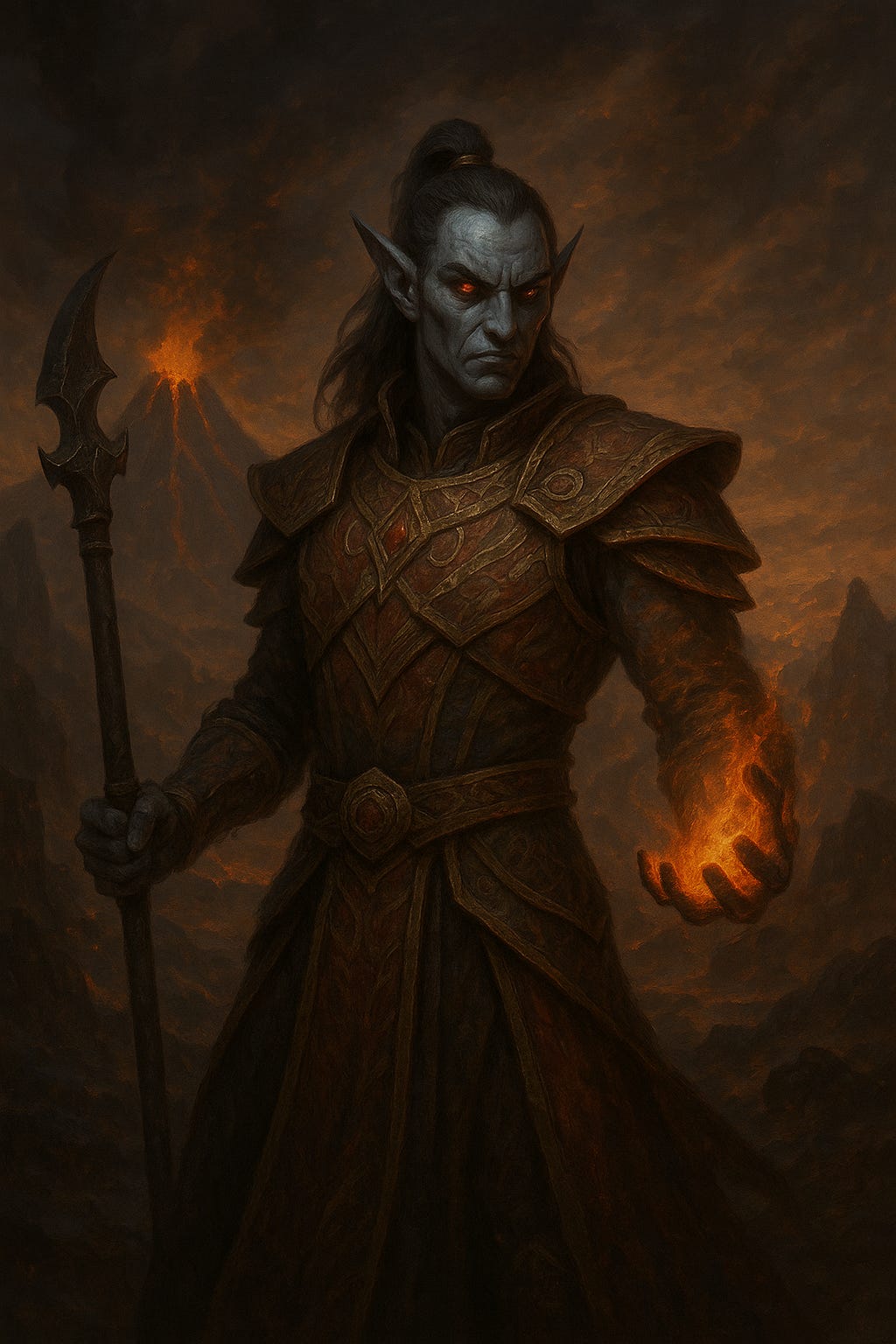
The Døkkálfar
The Dark Elves of Norse Mythology: From their Ancient Origins to Modern Fantasy

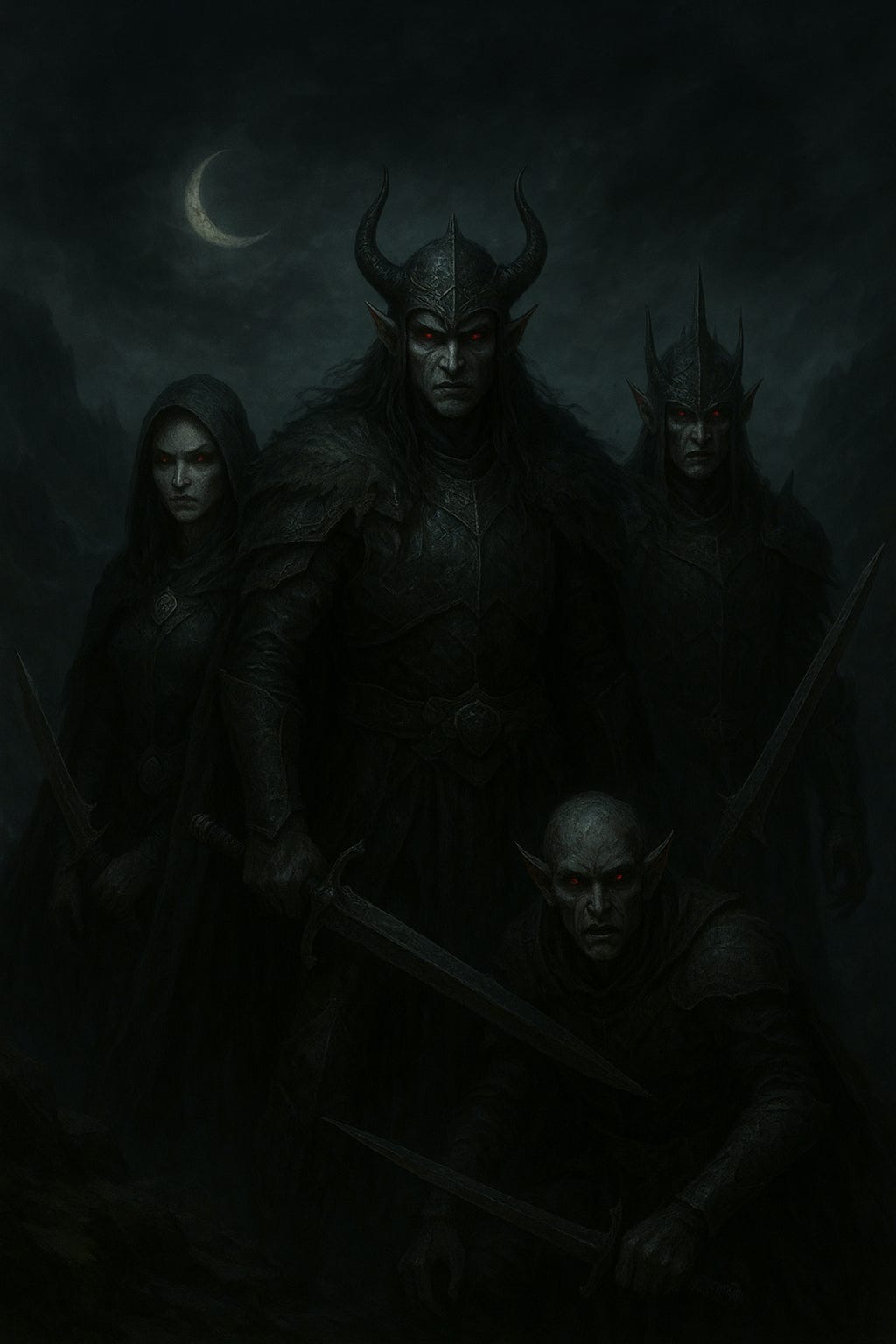
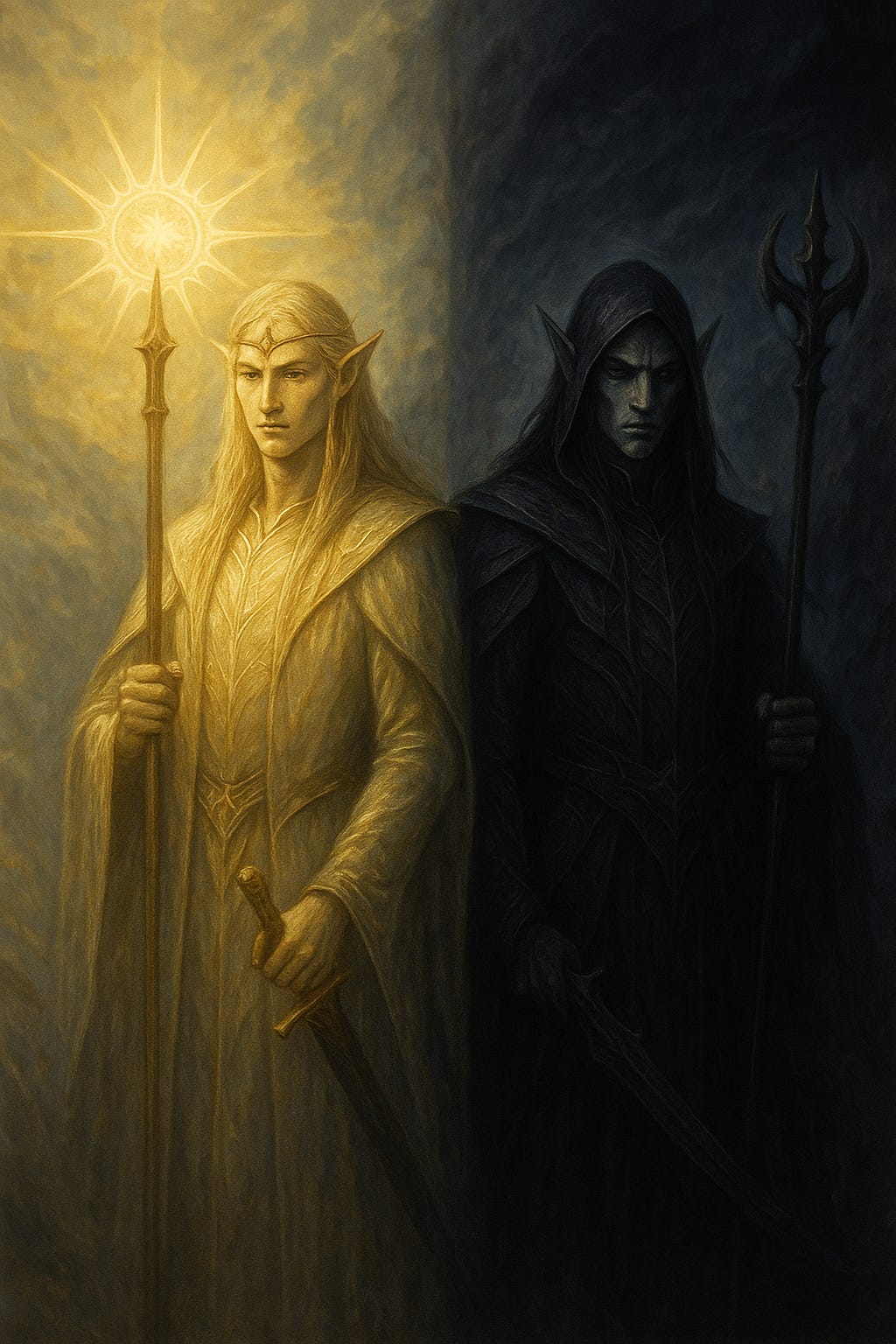
In Norse cosmology, the elves (álfar) occupy a liminal space between the mortal and the divine. While the ljósálfar (“light elves”) dwell in the bright realm of Álfheimr and are associated with beauty, grace, and closeness to the gods, their shadowy counterparts, the svartálfar (“black elves”) and døkkálfar (“dark elves”), inhabit the deep earth and are closely linked to craftsmanship, cunning, and the subterranean world of Svartálfaheimr.
For centuries, scholars and storytellers have debated whether svartálfar and døkkálfar are genuinely different from dwarves (dvergar). The primary sources are vague and sometimes conflicting, reflecting the oral, patchwork nature of Norse myth before Snorri Sturluson systematised it in the 13th century.
However, this article will view these shadowy álfar, svartálfar (“black elves”) and døkkálfar (“dark elves”), as separate beings from the Dwarves (Dvergar). It will delve into the depths of their influence throughout history, from their ancient, ambiguous origins to modern fantasy.
The Sources: What the Eddas Actually Say
The Poetic Edda, Hrafnagaldr Óðins and Snorri’s Prose Edda serve as our main windows into these beings.
In the Hrafnagaldr Óðins, the seeress refers to “døkkálfar” living beneath the earth, separate from both light elves and dwarves.
Snorri Sturluson, in the Gylfaginning section of his Prose Edda, explicitly states: “There is another place called Svartálfaheimr. There dwell the people called dark-elves (svartálfar). … The dark-elves are blacker than pitch.” Yet, in the very next breath, he describes them as master smiths who forge the gods’ greatest treasures, a behaviour identical to that of dwarves elsewhere in his work.
The smiths who forge Thor’s hammer Mjölnir, Odin’s ring Draupnir, and Frey’s golden boar Gullinbursti are named as dwarves (Brokkr and Eitri, or the sons of Ivaldi), but other myths attribute similar feats to svartálfar.
Because of this overlap, many modern scholars (John Lindow, Rudolf Simek, etc.) argue that “svartálfr” was simply another term for dwarf, highlighting their dark skin (from living underground) and their morally ambiguous nature rather than a separate species. Others believe that the original oral tradition distinguished three types of álfar: light, dark, and black, with only the latter fully equated with dwarves.
Medieval and Renaissance Echoes
After the conversion of Scandinavia, the old myths did not disappear - they were demonised. Dark elves became part of the “hidden folk” in later Scandinavian folklore and shifted from being powerful ancestral and nature spirits into beings with mixed benevolence and malevolence. They were sometimes regarded as harmful spirits but also adapted into folklore as mischievous entities, land spirits, or even as explanations for misfortune.
Practices like the álfarblót (sacrifice to the elves) evolved into private rituals to appease them, and protective amulets such as the älvkors (elf cross) were used to ward off harm, showing that the belief in their power persisted despite Christianisation.
Tolkien and the Great Divergence
J.R.R. Tolkien, a professor of Old Norse, was acutely aware of the ambiguity in the sources. In his legendarium, he made a deliberate and influential choice: He kept “elves” as tall, beautiful, immortal beings descended from the ljósálfar tradition.
He turned “dwarves” into a separate proud race (inspired by the dvergar/svartálfar), secretive, avaricious, and master smiths.
But Tolkien also planted the seed for the modern “dark elf” in a different way. In The Silmarillion and The Hobbit, he describes certain elves who refuse the summons to Valinor and remain in Middle-earth, growing ever more sinister. The stage was set for moral darkness to be mapped onto physical darkness.
From Dungeons & Dragons Drizzt to the Caramere Saga
In 1974, Gary Gygax and Dave Arneson introduced Dungeons & Dragons. Early editions treated “dark elves” simply as a particularly evil subterranean elven offshoot. By the 1980s, the term “drow” (a word Tolkien had borrowed from Scottish folklore and used once in The Hobbit for an unrelated creature) became canonical for black-skinned, white-haired, matriarchal, spider-worshipping underground elves.
The single most influential populariser of the modern dark elf was R.A. Salvatore’s character Drizzt Do’Urden (first appearing in The Crystal Shard, 1988), a noble drow ranger who rebels against his evil society. Drizzt turned the “evil dark elf” trope on its head and made the drow one of the most recognisable fantasy races worldwide.
Video Games, Warhammer, and Beyond Games Workshop’s Warhammer Fantasy (and later Age of Sigmar) gave us the sadistic Druchii or Dark Elves of Naggaroth, a cruel, beautiful, and overtly inspired by both Melnibonéans from Michael Moorcock and the decadent aspects of Tolkien’s fallen elves.
The Elder Scrolls series (starting with Daggerfall, 1996) features the Dunmer (dark elves) of Morrowind, an ash-skinned, red-eyed race, with a complex culture blending ancestral worship and Daedric pacts.
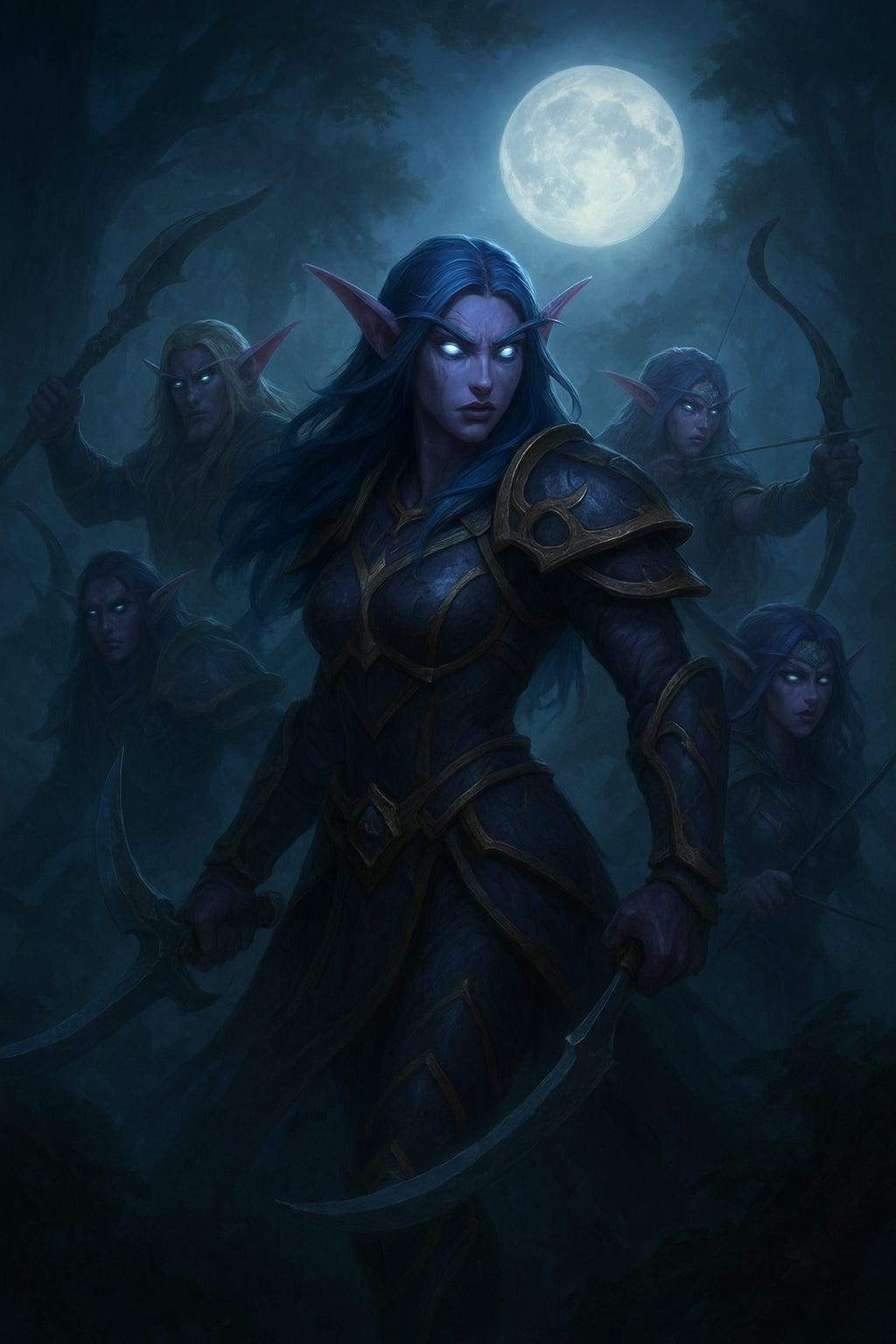
World of Warcraft shook the stereotype of elves with the introduction of the druidic, moon-worshipping Kal’dorei (night elves) in Warcraft 3 (2002), a distinct race from their sun-worshipping cousins, the Quel’dorei and later Sin’dorei (high elves and blood elves). Both races reflect their Norse origins as nods to the Light Elves and the Dark Elves.
The Caramere Saga’s (2025) related lore text returns the Dark Elves to their origins. The Dokk’alfar are a warrior race who dwell within the frozen wastes of the Alfarian Empire. Unlike their softer southern kin, they are stronger, larger and forge heavy plated armour. Their capital is built within the cliffs and is entirely underground, a nod to the dark elves’ Norse roots.
The Modern Dark Elf Archetype
Today, the term “dark elf” almost universally means: An elf (tall, graceful, long-lived) rather than a dwarf. Dark or black skin, often with white or silver hair as well as a subterranean or exiled origin and either irredeemably cruel (Warhammer Druchii, classic D&D drow) or tragically misunderstood (Drizzt, Elder Scrolls Dunmer or the Caramere Saga’s Dokk’alfar)
This image owes far more to 20th-century fantasy than to the original Norse svartálfar. The transformation is a fascinating example of how modern storytelling took a footnote in Snorri, dark-skinned underground craftsmen, and fused it with the “fallen angel” trope applied to beautiful elves. Yet the core remains recognisably Norse, as beings of immense talent who live below the earth, whose gifts are double-edged, and whose relationship with the surface world is one of uneasy barter, resentment, and occasional outright war.
From the ambiguous beginnings to the modern drow city of Menzoberranzan, the dark elves, whether called svartálfar, døkkálfar, or something new, continue to haunt our imagination as the brilliant, dangerous shadows beneath the world.